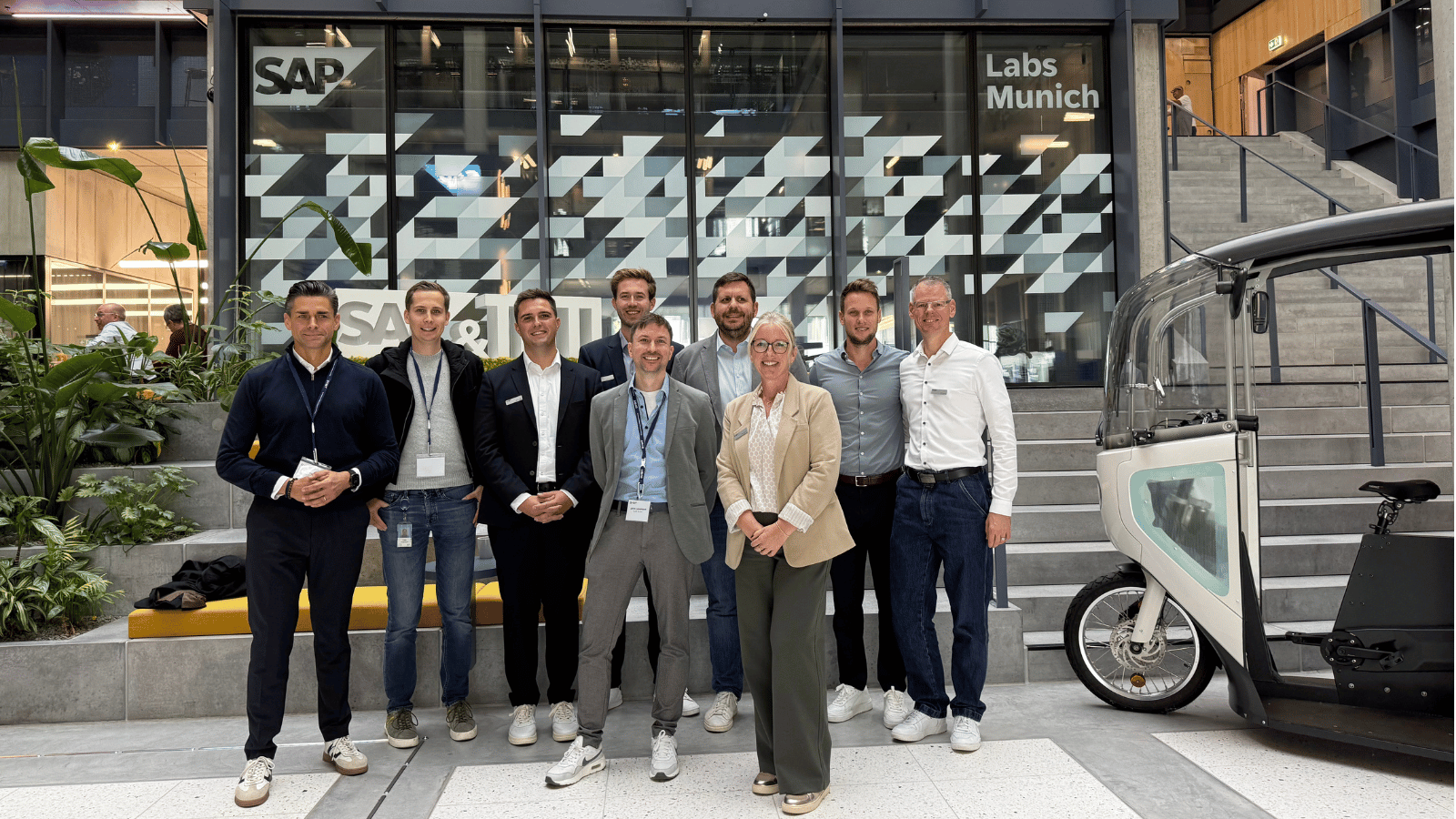
More than 60 participants, real-world transformation examples, AI use cases and intensive discussion: SYBIT XBOOST Service 2026 in Munich highlighted just how fundamentally the role of customer service is changing. Today, service no longer begins only when something goes wrong. It is becoming a strategic part of the entire customer experience.
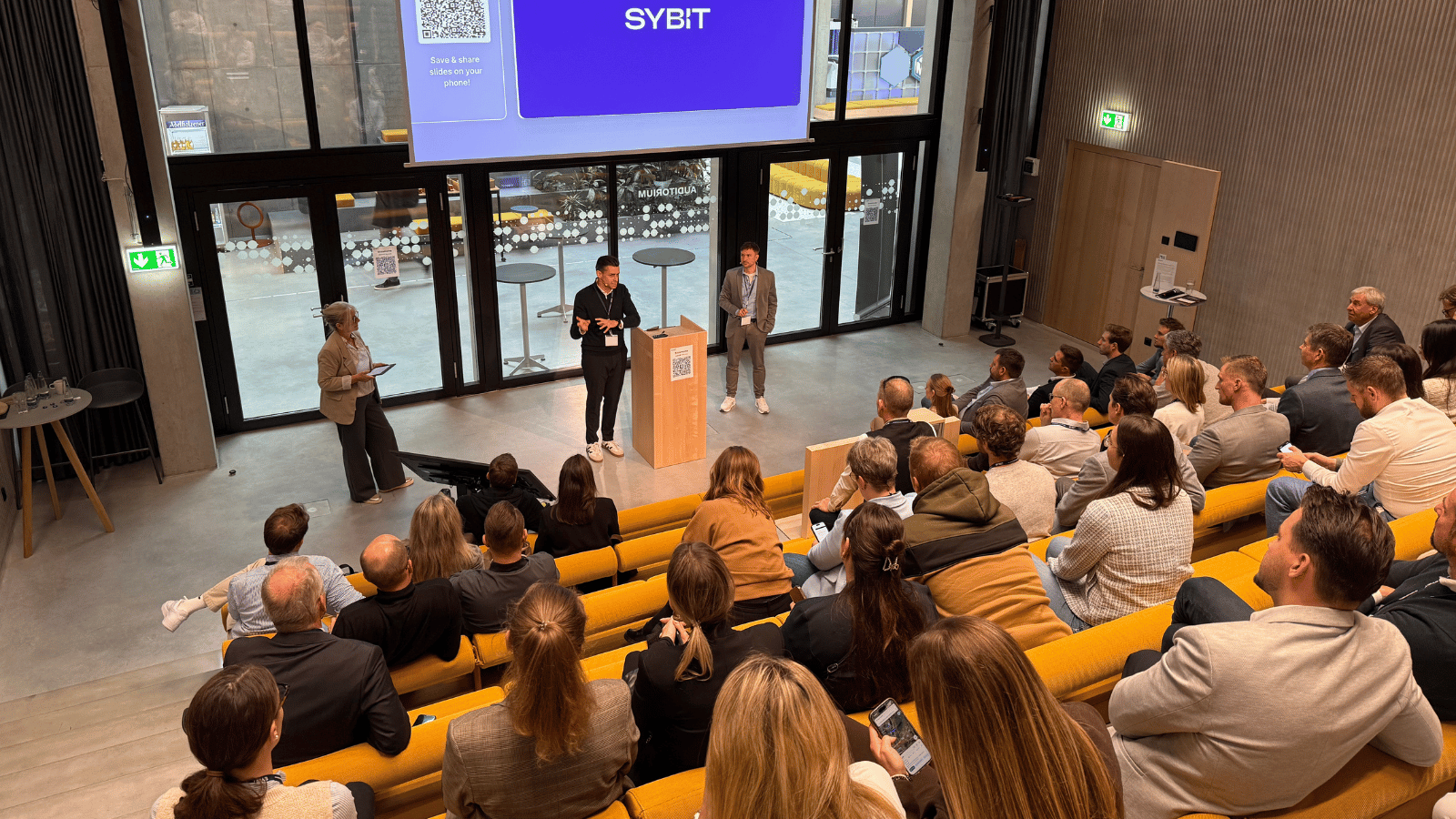
Products are becoming increasingly comparable. Digital interactions are becoming the norm. And artificial intelligence is increasingly taking over tasks that were previously handled manually. As a result, the question of how companies can differentiate themselves in the eyes of their customers is changing too. Service plays a key role in this. From initial consultation through ordering and usage to maintenance, complaints or spare parts requirements, every stage creates moments that shape how customers perceive a brand, how much they trust it and whether a business relationship develops into long-term loyalty. That is why XBOOST Service 2026, held on 22 October at SAP Labs in Munich-Garching, was about far more than new service technologies. At its heart was one question: How should service be set up when customers expect seamless experiences, AI can take on more and more tasks, and personal interaction is simultaneously becoming more important at the moments that matter? From Tadano and SAP to NovaTaste, from service portals and AI agents to the transformation of global processes, one common theme emerged: service needs to be designed end to end.
Service is more than support. Service shapes the brand.
Lars Frerking, Head of Advisory at SYBIT, opened the event with a question that, at first glance, has little to do with ticketing systems or service architectures: what actually makes a strong brand? It is not just products, logos or brand promises. What really matters are the moments in which customers actually experience a brand. A fast solution when a machine comes to a standstill. An employee who takes ownership of a problem. Or a service process in which customers do not have to explain their issue all over again every time they make contact. It is moments like these, seemingly small in isolation, that shape brand perception. The central idea is simple: satisfaction is the foundation. Emotion is the lever. Only when companies not only meet expectations but positively exceed them at decisive moments can stronger customer relationships develop. This perspective is particularly relevant in the age of AI. The more standard interactions can be automated, the more consciously companies need to decide where efficiency matters and where human interaction makes the difference. The strategic objective, therefore, is not to replace human service wherever possible. Instead, technology should create space where experience, accountability and personal interaction are particularly valuable. It is precisely this interplay that can create outstanding customer experiences and stronger brand loyalty.
End to end instead of silos: customers do not see departments
For service to fulfil this role, however, optimising individual touchpoints is not enough. Customers do not experience sales, customer service, field service, spare parts departments or different backend systems. They experience a process. That is why end-to-end thinking featured so prominently across almost every topic at XBOOST Service 2026. A service case might begin on a website or via email, continue through a portal, require information from ERP and CRM systems, involve an on-site technician and ultimately result in an order or invoice. If context is lost at any point along the way, the customer does not perceive a system break. They simply experience poor service. The key challenge, therefore, is not merely to make each individual process step more efficient. Companies need to design the connections between them. End-to-end service means consistently thinking about processes from the customer's initial request right through to resolution, and organising the underlying data, systems, teams and responsibilities accordingly. The practical examples presented throughout the day demonstrated just how demanding, but also how valuable, this shift in perspective can be.
Tadano: service transformation does not start with software
Andreas Sigl from Tadano and Jahn Lossmann from SYBIT demonstrated how such a target vision can be developed. Tadano takes a global approach to service. Customer enquiries come in via portals, email, telephone and personal interactions. At the same time, relevant information needs to be preserved throughout the process: customer data, machine data, service knowledge, order status and handovers between Customer Support, Spare Parts and Field Service. The implication is clear: what is needed first is a shared understanding of processes, responsibilities and the desired customer experience. Only then does the technical architecture follow. The connection with the S/4HANA transformation is particularly relevant here. Existing processes are not simply being transferred into new systems. Instead, the opportunity is being used to rethink service from the initial customer enquiry through to billing. The target architecture connects SAP Commerce Cloud, SAP Service Cloud, Field Service and Asset Management with S/4HANA Service and an end-to-end integration approach. At the same time, Tadano demonstrates that technology can only deliver its full impact when processes and organisational structures are considered alongside it. The key takeaway: a new service system does not automatically create a new service experience. Sustainable transformation only emerges through the interplay of organisation, end-to-end processes, data and technology.
SAP: AI is changing service
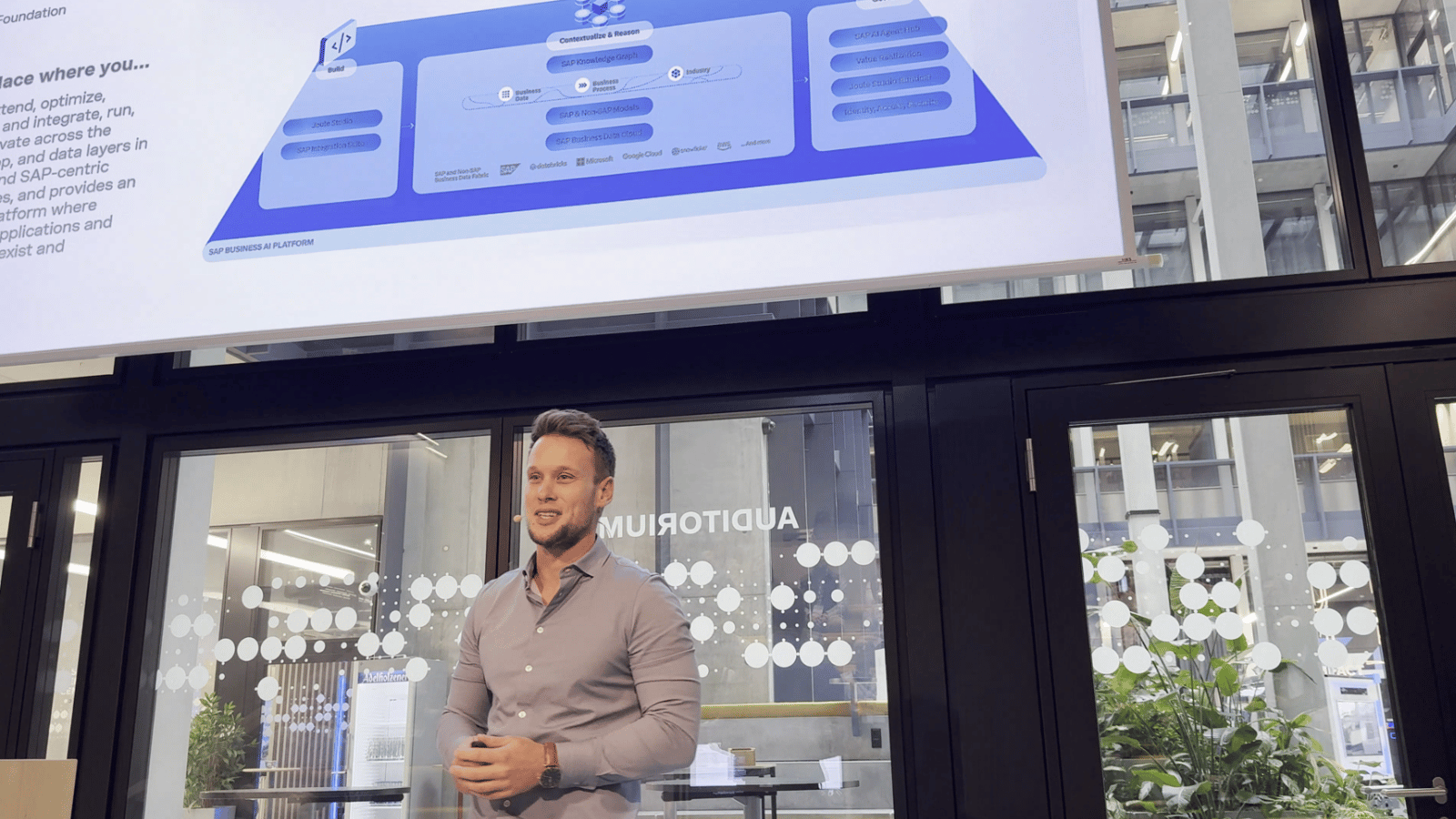
Finn Haeder from SAP demonstrated just how rapidly the technological possibilities are developing. One of the biggest challenges in service remains a lack of context. Customers have to explain their issue repeatedly, information is distributed across different systems, and employees spend a significant proportion of their time researching information and carrying out routine tasks. This is precisely where AI can help. SAP describes this development as a move towards Autonomous Service: AI assistants can bring information together, support routine cases or increasingly handle them autonomously, while providing employees with the relevant context for more complex cases. The scenarios presented ranged from Case Preparation and Knowledge Retrieval to Action Recommendations, Self-Service and continuous service optimisation. This changes the perspective on AI in service. Its real potential emerges when it becomes part of end-to-end processes. Here too, the discussion leads back to end-to-end thinking: AI can only provide effective support if the data and relevant business context it needs are accessible.
Business value first: why AI needs to start with the use case
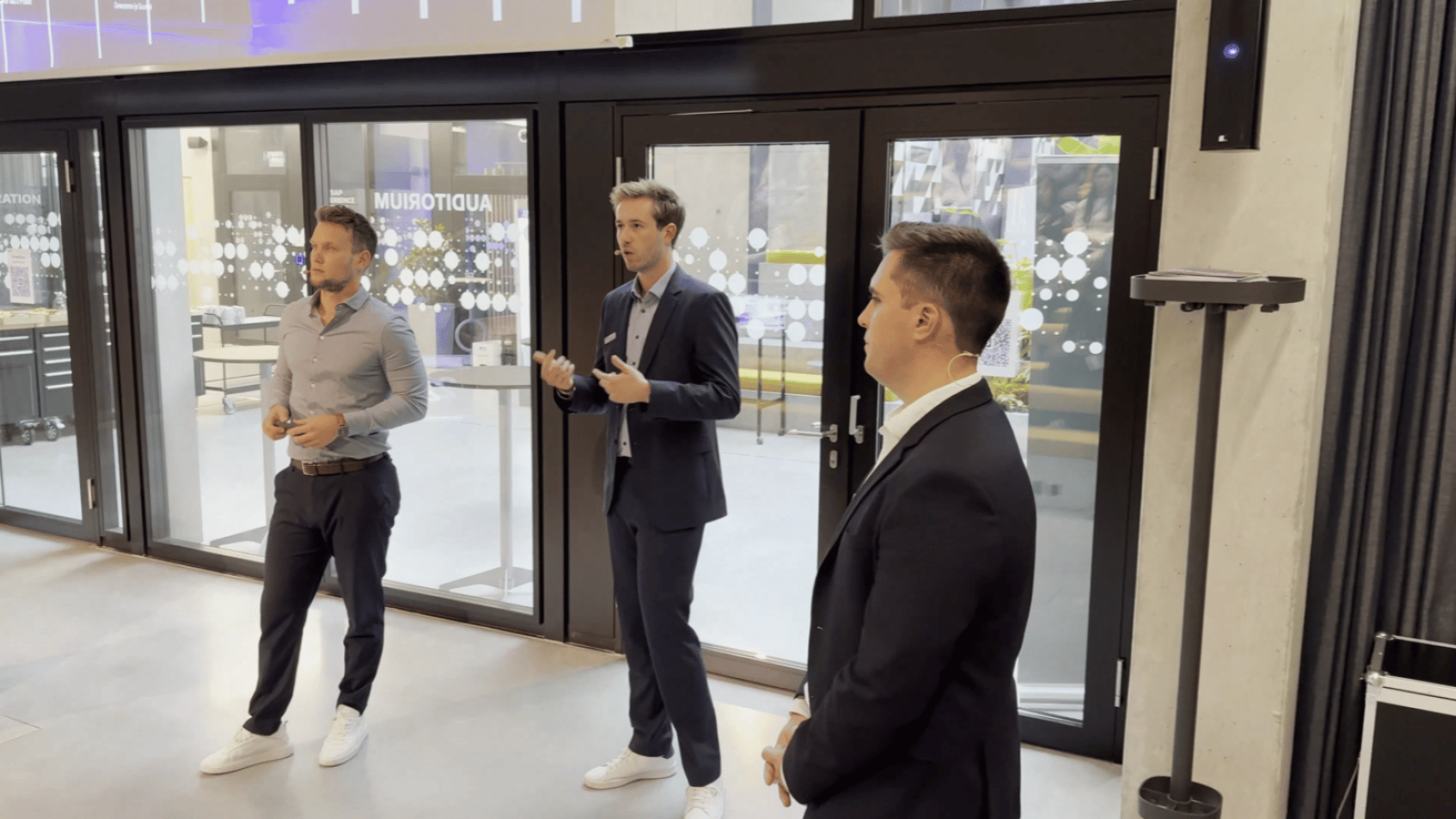
From a technology perspective, a great deal is already possible today. The more difficult question is: where does it genuinely create value? This was the focus of the three AI use cases presented by Jonas Degener, Lars Frerking and Mirko Pleli. The approach deliberately reverses the logic often seen in AI projects: do not start with the model and then search for an application. Instead, begin by identifying a problem whose resolution will generate tangible business value. The principle can be summed up in a simple sequence: Use Case → Data Foundation → AI. Or, as it was put during the presentation: AI comes third. Several scenarios illustrated what this can look like in practice. A Warranty Prediction Agent can use historical business data, equipment information and defect data to prepare an assessment of a warranty case and recommend appropriate next steps. Other scenarios use service and customer data as the basis for recommendations or Next Best Actions. The real value does not come from the language model alone. It requires a reliable data foundation, integration, an appropriate enterprise architecture and, above all, a clearly defined problem. The most important question when starting with AI is therefore: what problem do we want to solve measurably better?
A portal alone does not create a seamless customer journey
The breakout sessions then explored this logic in greater detail. In the session on service portals, Dirk Harzer and Jahn Lossmann used the example of a fictitious machine breakdown to demonstrate where customer journeys often break down in practice today. Fundamentally, the customer has just one problem: the machine is down and needs to be running again. Behind that one problem, however, there may be manuals, portals, spare parts shops, email, hotlines, dealers and numerous backend systems. Machine or serial numbers may have to be provided several times, information may need to be researched all over again, and context can be lost whenever the customer switches between channels. The key insight: the capabilities often already exist. It is the connections between them where the journey breaks down. This also changes the role of a service portal. It is not simply an additional frontend. When designed properly, it becomes the visible control centre of an integrated service landscape, bringing users, machines, contracts, service histories, knowledge, dealers and operational processes together within a shared context. The decisive factor is therefore less the individual user interface and more the architecture behind it: processes, data, business systems, integration, governance and ownership. Integration before interface was therefore one of the day's most important takeaways.
Assisted Service: when AI has access to the relevant context
Jonas Degener and Mirko Pleli demonstrated just how far this concept can go in the breakout session on Assisted Service. Using NovaTaste as an example, they presented an architecture featuring four specialised assistants and a total of 13 agents. These include agents for email processing, classification, Knowledge Retrieval, Case History, product recognition and Order Simulation. The scenarios range from Issue-to-Resolution and Complaint-to-Resolution to Email-to-Order. Incoming information is structured, classified and enriched with knowledge or business data from a range of sources. People remain part of the process through human-in-the-loop mechanisms. The Email-to-Order scenario in particular illustrates the direction of travel. Customer data, product history, pricing and availability information can be connected to turn an incoming order into a prepared sales order. For the scenario presented, the supporting material indicates the potential to reduce average processing time by 75 per cent. Once again, however, the key insight is not the individual agent. AI becomes valuable when it is embedded within an end-to-end process and given access to the relevant business context.
NovaTaste: transformation in practice starts with the process
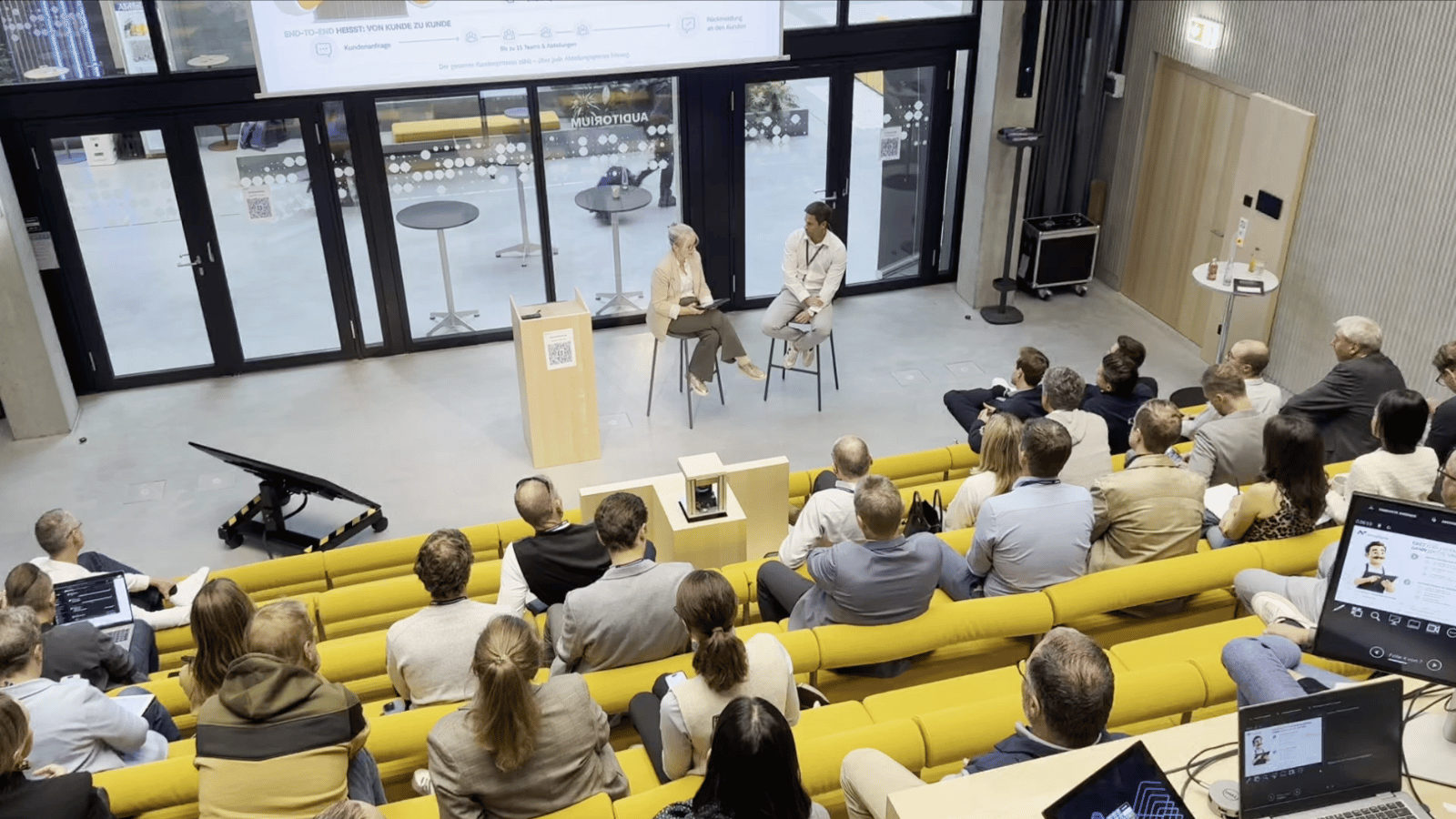
A conversation between Jana Kiechle and Herbert Frohner, Global CIO of the NovaTaste Group, provided a fitting conclusion to the day. Many of XBOOST's core themes came together once again: end-to-end processes, integration, portals, automation, AI and the organisational reality behind a global transformation. And the discussion deliberately began with the process. Before talking about AI or automation, organisations need to understand how a customer enquiry actually moves through the business. At NovaTaste, for example, it became clear that in extreme cases up to 15 teams could be involved in handling a single enquiry. Only by systematically examining these workflows did handovers, differing ways of working, missing standards and knowledge held by individual employees become visible. This is precisely where the value of a consistent end-to-end perspective becomes apparent. Customers do not care how many internal departments are involved, who happens to be available or which system is responsible for which step. They expect the right solution within an acceptable timeframe. This raises questions that go far beyond IT: does a case really need to be passed on to another team? Is all the necessary information available at first contact? Are responsibilities organised effectively? And can unnecessary loops be removed from the process?
Transparency turns automation into something tangible
One example demonstrated particularly clearly how valuable the digitalisation of these processes can be. After introducing ticket categories, NovaTaste discovered that around 52 per cent of all tickets were order enquiries. This meant that a significant proportion of Customer Service capacity was being consumed by a process whose scale had previously not been visible: orders arriving by email and subsequently being transferred manually into SAP. This transparency created a clear opportunity for Order Automation. Incoming orders can be identified with the help of AI and prepared to such an extent that employees ideally only need to review and approve them. The example vividly demonstrates how AI projects can emerge when technology is not the starting point: Digitise the process → create transparency → identify potential → automate selectively. Similar opportunities became apparent in Self-Service. Customers can, for example, maintain certain master data themselves or retrieve required material specifications via the portal instead of repeatedly requesting them from Customer Service. Digitalisation therefore also becomes a management tool. Companies gain visibility into the types of enquiries they receive, where processing time is being lost and where automation can genuinely reduce workloads.
Transformation is an ongoing process
At the same time, the conversation with NovaTaste made it clear that there is rarely a single linear path to transformation. Different countries are at different stages of development. Global CRM and SAP roll-outs need to be aligned. New companies are added to the organisation. Priorities change. This makes a clear strategic target vision all the more important. Not every additional feature carries the same significance as an initiative that creates the long-term foundation for global sales, service, ERP or data processes. Transformation therefore also means setting priorities, understanding dependencies and keeping projects focused enough to ensure they can actually be completed. This provided a strong conclusion to XBOOST: end-to-end thinking means understanding the bigger picture and using that understanding to determine the right next steps.
Human or AI? The real answer is both.
Across the different sessions, a remarkably consistent picture emerged. The more routine tasks AI can take on, the more important it becomes to identify where people genuinely make the difference. AI can classify, summarise, retrieve knowledge, recognise patterns, prepare recommendations or initiate processes. People can take responsibility, deal with exceptional situations, build relationships and create trust. The two are not in conflict. On the contrary, when used effectively, automation can give employees back precisely the time that is currently lost to research, repetitive data entry, switching between systems or manual handovers. That time can then be invested where human interaction creates the greatest value. This brings us back full circle to the beginning of XBOOST: strong brands are built in small moments. The strategic task is to design processes and technologies in a way that creates space for precisely those moments.
Conclusion: the future of service is end to end
XBOOST Service 2026 demonstrated that service is undergoing a fundamental transformation. Service is no longer simply the organisational function that steps in when a question or problem arises after a sale. It is becoming a strategic part of the customer experience and, with it, a driver of customer loyalty, brand perception and differentiation. Technology plays a crucial role in this. AI can accelerate processes, make knowledge accessible, support employees and automate an increasing number of routine tasks. Portals create new self-service opportunities. Integrated platforms can make information accessible across system boundaries. But perhaps the most important insight from XBOOST is this: None of these tools delivers its full impact in isolation. What matters is the interplay between strategy, end-to-end processes, data, integration, organisation, AI and human interaction. For companies, this results in five key areas for action:
- Think strategically about service: Do not reduce service to support and ticket handling. Understand it as part of the customer experience and the brand promise.
- Think end to end from the customer's perspective: Do not optimise departments and systems in isolation. Consider the entire journey from the customer's initial request through to resolution.
- Connect context: Customer, product, equipment, contract and service data must be available wherever decisions are made.
- Start AI with a business case: Define the problem and the expected value first, then select the appropriate data foundation and technology.
- Empower people where they matter most: Automate routine work and give employees the capacity to focus on the situations where experience, empathy and accountability make the difference.
The service of the future will therefore be more connected, more integrated and more consistently designed around the customer. And that is precisely what can make it both more efficient and more personal. This is where the strategic opportunity lies: service is evolving from a downstream function into one of the places where companies can tangibly deliver on their brand promise every single day.

Digital Customer Service – Connected, Efficient, AI-Powered
End-to-End Service processes for better customer experiences, more efficient teams and measurable business value. Check out, why digital service transformation matters now.