Most sales organizations have invested heavily in CRM systems over the last decade. Processes have been defined, pipelines structured, dashboards built, and data models refined.
Yet despite all these efforts, many sales leaders still struggle with the same challenge: incomplete customer data, inconsistent pipeline updates, and CRM systems that never fully reflect what's actually happening in the field.
The reason is often surprisingly simple.
The biggest CRM challenge isn't technology. It's timing.
Where Valuable Sales Knowledge Gets Lost
Think about a typical day in field sales.
A sales representative meets a customer, discusses current challenges, explores new opportunities, agrees on next steps, and uncovers valuable insights that could influence future business decisions.
At that moment, the information is fresh, detailed, and highly valuable.
But what happens next?
The rep drives to the next appointment. Answers emails. Joins an internal call. Handles another customer meeting. By the end of the day, documenting everything in the CRM becomes just another task on a long to-do list.
Hours later, important details have already faded. Notes are incomplete. Follow-up actions may be forgotten. Some information never reaches the CRM at all.
Not because salespeople don't want to document their work. But because selling and documenting are two very different activities that often compete for the same limited time.
The Hidden Cost of Delayed Capturing Data
When information is captured late, organizations pay a price far beyond administrative inefficiency.
Customer histories become fragmented. Pipeline reviews rely on incomplete information. Forecasts become less reliable. Managers struggle to understand what is really happening in customer conversations.
Over time, these small gaps accumulate.
The CRM remains populated with data, but not necessarily with the insights that matter most:
- Customer priorities
- Competitive information
- Objections and risks
- Buying signals
- Agreed next steps
Ironically, the most valuable information often exists for only a brief moment: immediately after the conversation itself.
Why More CRM Training Isn't the Answer
Many organizations respond by introducing new documentation standards, additional governance, or training initiatives.
While these measures can help, they rarely address the root cause. The challenge is that documenting customer interactions often feels disconnected from the way salespeople actually work.
Most representatives spend their day talking to customers, not typing into systems. Yet many CRM systems are still designed primarily for desk-based employees rather than the realities of mobile field sales.
So how can CRM capture information without requiring more effort from sales teams?
A New Approach: Voice-First CRM
Recent advances in conversational AI are making it possible to rethink how sales information is captured.
Instead of entering notes manually after each customer interaction, sales representatives can simply talk.
Voice-first AI assistants enable sales teams to record customer insights immediately after meetings, while the conversation is still fresh. The AI structures the information, extracts relevant context, and transfers it into the CRM system.
The result is a more natural workflow that aligns with how sales professionals already work.
Less administration.
More complete customer data.
And better visibility into the reality of customer interactions.
Closing the Gap Between Conversations and CRM
At its core, the real challenge lies in the gap between the customer conversation and the moment information enters the CRM.
Organizations that can close this gap gain access to richer customer insights, more reliable sales data, and a more productive sales organization. Reducing administrative work also gives representatives more time for customer visits and better preparation for every conversation – creating the conditions for stronger conversion rates and revenue growth.
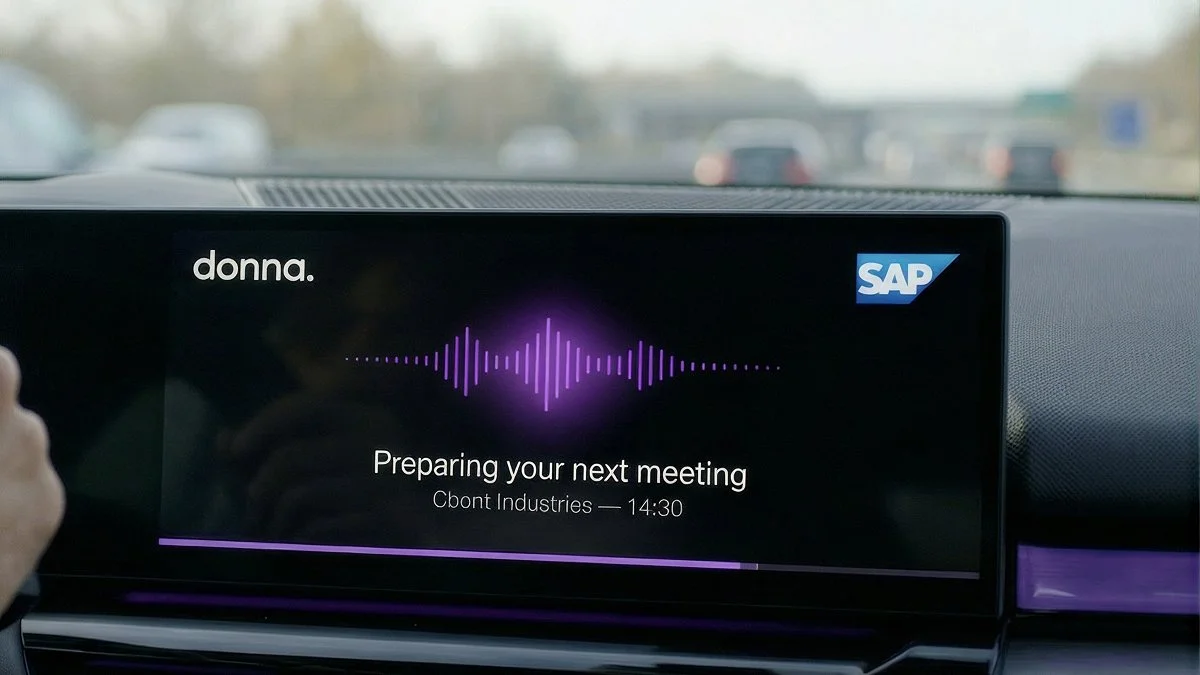
This is exactly where voice-first AI assistants such as Donna come into play. By helping sales teams capture information through natural conversation and automatically documenting it in SAP Sales Cloud, Donna reduces the friction between selling and reporting. But it goes beyond data capture: it can also take on sales administration and accelerate follow-up by creating opportunities, logging meetings, preparing quotations, and drafting follow-up emails.
By capturing customer knowledge when it is freshest and taking care of time-consuming follow-up tasks, voice-first AI assistants such as Donna give sales teams more time to focus on what drives the business forward: visiting more customers and using richer, more up-to-date data to prepare for the next meeting. This enables more relevant customer conversations, supports higher close-won rates, and ultimately creates greater revenue potential.