Like many other sectors, the utilities industry is entering a new phase of digitalisation. Improving individual processes, providing customer portals and reducing the pressure on service channels remain highly relevant. However, the 2026 Transformation Study by NTT DATA Business Solutions reveals a significant shift: 60 per cent of companies now see the introduction of modern technologies such as artificial intelligence as a primary driver of transformation. Some 46.5 per cent cite greater innovation capabilities as a key objective, while 42.2 per cent aim to make their organisations and IT landscapes more flexible. According to the study, transformation is therefore no longer primarily understood as a project for reducing costs and increasing efficiency. It has become a prerequisite for remaining competitive and future-ready.
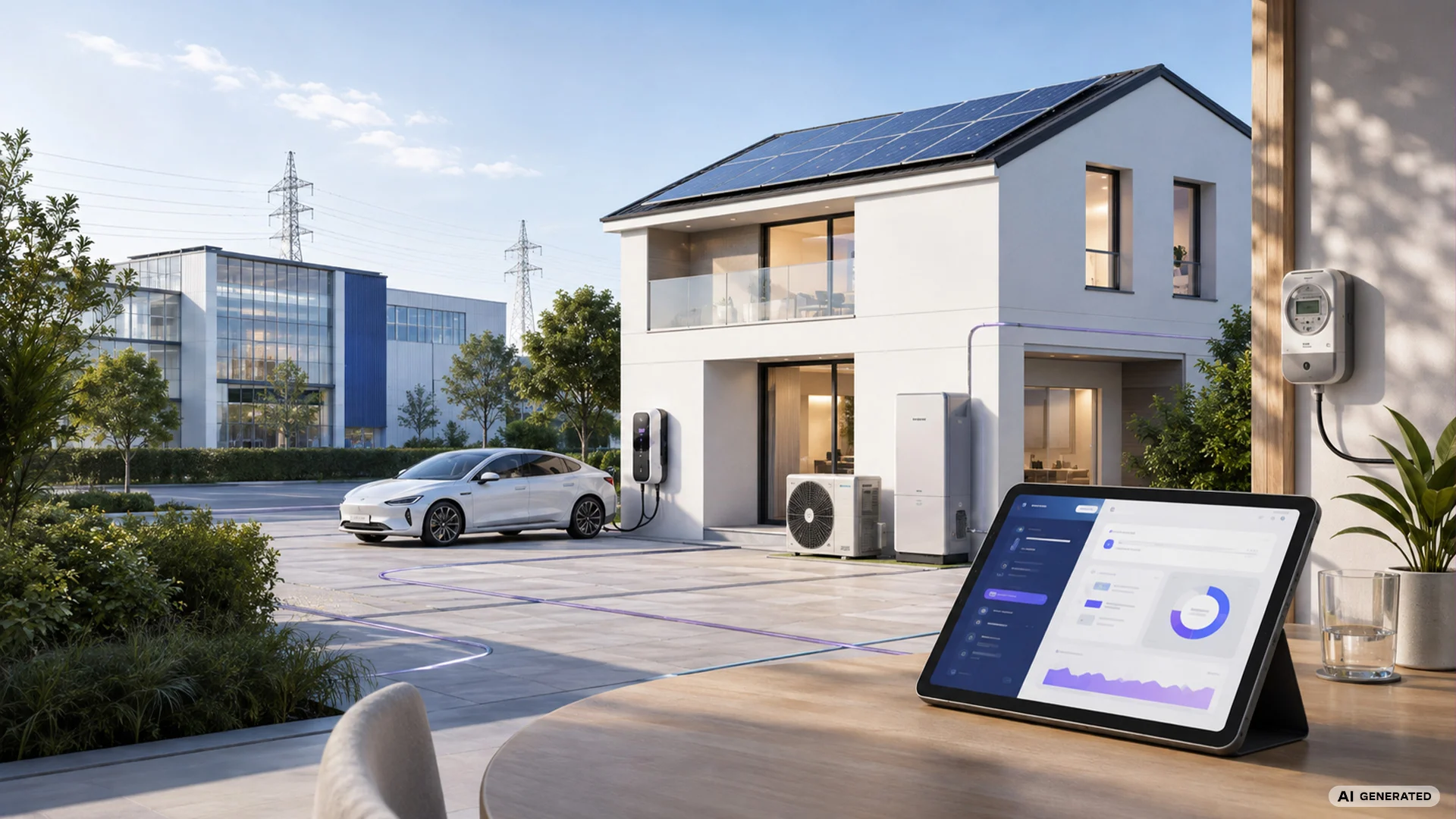
This development is particularly relevant to energy providers. The industry is facing simultaneous pressure from regulation, sustainability requirements, e-mobility, decentralised energy generation, rising customer expectations and new technological possibilities. None of these developments exists in isolation. Together, they are fundamentally changing markets, customer behaviour and business models.
Customer experience is therefore becoming a strategic capability. Why? Because CX translates technological modernisation, data and new energy offerings into tangible value for customers: simpler processes, transparent information, proactive advice and guidance through an increasingly complex energy landscape.
Optimisation Is No Longer Enough
For many years, the utilities business model was relatively straightforward: energy was generated, distributed, measured and billed. Customers were primarily consumers. Interaction usually took place when a contract was concluded, a bill needed explaining, a meter reading was submitted or a fault had to be resolved.
This model is changing. Traditional energy consumers are increasingly becoming prosumers who generate, store and, in some cases, market energy themselves. Photovoltaic systems, battery storage, wall boxes, heat pumps and smart home solutions turn households and businesses into active participants in the energy system. As a result, utilities are evolving from suppliers into orchestrators of energy ecosystems.
This also changes what customers expect from their experience. Customers do not want to think in terms of systems, departments or internal processes. They want to resolve a specific issue: moving home, changing tariffs, registering a photovoltaic system, understanding a bill or integrating an EV charging solution. From the provider’s perspective, numerous systems and organisational units may be involved. From the customer’s perspective, it is one connected journey.
From Kilowatt-Hours to Energy Experience
The central change concerns the value proposition. In future, the focus will be less on selling kilowatt-hours and more on making energy tangible as a service and an experience. Customers do not simply purchase electricity or gas. They are looking for convenience, cost control, sustainability, security of supply and guidance.
Dynamic tariffs, home energy management, smart charging and wall box integration are good examples. However, the actual value does not come from any one component. It comes from their interaction. Photovoltaic systems, battery storage, heat pumps, wall boxes and consumption data need to be orchestrated in a way that minimises complexity for the customer.
This is where the energy provider’s new role emerges. The provider becomes an Energy Advisor. This means proactive notifications rather than reactive information, individual offers rather than standard tariffs, transparent status updates rather than time spent waiting, and data-based advice rather than isolated communications.
The Greatest Potential Lies in End-to-End Journeys
Many utilities have established digital touchpoints in recent years, including customer portals, mobile apps, online forms, chat, email processes and self-service functions. These are important, but they are not enough. A genuine customer experience is not created at an individual touchpoint. It is created throughout the entire journey.
Moving home is a simple example. For the customer, it is one process. Within the company, it may involve contract management, master data, billing, market communication, customer service and the customer portal. The same applies to faults, photovoltaic connections, tariff changes and billing enquiries. If handovers fail, status information is unavailable or customers have to make repeated enquiries, friction is created.
Leading utilities therefore consider customer needs from end to end. Who takes responsibility? What happens next? What information does the customer need at each stage? And how can the business ensure that every channel accesses the same data foundation?
No AI Without Data Quality
The Transformation Study mentioned above illustrates why this is so important. At 26.4 per cent, data quality is the most frequently cited unexpected challenge in transformation projects. At the same time, 34.4 per cent of respondents identify transparency across relevant data as one of the most important success factors.
This is particularly relevant to the utilities industry. Customer data, contract data, meter data, service cases, billing information and technical data are often distributed across different systems. As long as this data is not consistent, accessible and capable of being integrated effectively, the potential of personalisation, self-service and AI-supported automation will remain limited.
Artificial intelligence can significantly improve customer service and sales, for example through the automatic classification of enquiries, intelligent routing, next-best actions or proactive customer communications. However, AI only creates genuine business value when the underlying processes, data and governance are in place. Technology alone does not turn an energy provider into an Energy Advisor.
Start CX in Customer Service
So where should utilities begin? Modern platforms, data products and integrated architectures are important. Nevertheless, noticeable improvements in customer experience can often be achieved simply by establishing clear process rules within customer service.
Three measures are particularly effective:
- A binding callback process
- Standardised responses to the most common enquiries
- A rule that no customer interaction ends without a clearly defined next step
Customers want to know what will happen, who is responsible and when they can expect a response. This transparency reduces uncertainty, prevents repeated enquiries and builds trust, even when an issue cannot be resolved immediately.
This highlights an important point: customer experience is not only about technology. It is also about process discipline, accountability and communication.
The Right Architecture Combines Stability with Experience
When gradually moving all processes onto a future-ready foundation, one aspect is particularly important: in the utilities industry, customer centricity must not come at the expense of regulatory stability. Billing, contract management, market communication, metering and compliance must remain reliable and transactionally secure. Modern utilities CX therefore requires an intelligent technological foundation.
Our recommendation is a clear division of roles. SAP S/4HANA Utilities serves as the system of record for regulatory core processes. Above this, SAP Customer Experience with the Utilities add-on forms the system-of-engagement layer for customer interactions, omnichannel service, service cases, status communications, self-service, customer portals, offers and advisory processes.
The strength lies in the interaction between these layers. Customers experience a connected, end-to-end process. In the background, core systems, CX solutions, portals, data integration and automation work together. This is how stable process logic becomes a tangible customer experience.
Conclusion: The Future of Utilities Will Be Decided by the Customer Relationship
The utilities industry is not being redefined by new technologies alone. What matters is how energy providers use these technologies to support customers more effectively, make processes more transparent and create new value propositions around energy.
The journey extends from a digital foundation and differentiating services through to platform models and increasingly automated energy ecosystems. This development is not linear. Digital channels, data integration, personalisation, AI and new business models are being developed and advanced in parallel.
The future of energy providers will therefore depend on their ability to intelligently orchestrate customer relationships, data and energy ecosystems. This is where it becomes clear whether digital services are genuinely creating value.

Turn operational complexity into a better customer experience
Utilities need service processes that work seamlessly from the first customer enquiry to field service delivery. The SYBIT Utility Approach connects these processes, improves efficiency and creates greater transparency for customers and service teams.