18.03.26
| How organisations can connect Sales, Commerce and IT into seamless, AI-enabled customer processes.
XBOOST: Integrated Journeys, Data Platforms and Agentic AI are Becoming Key Competitive Factors
At XBOOST Sales & eCommerce 2026 in Berlin, one thing became clear: separating Sales, Commerce and Service is no longer a viable model. Companies that fail to design their customer processes end-to-end are losing relevance – particularly as complexity rises and customer expectations continue to grow.
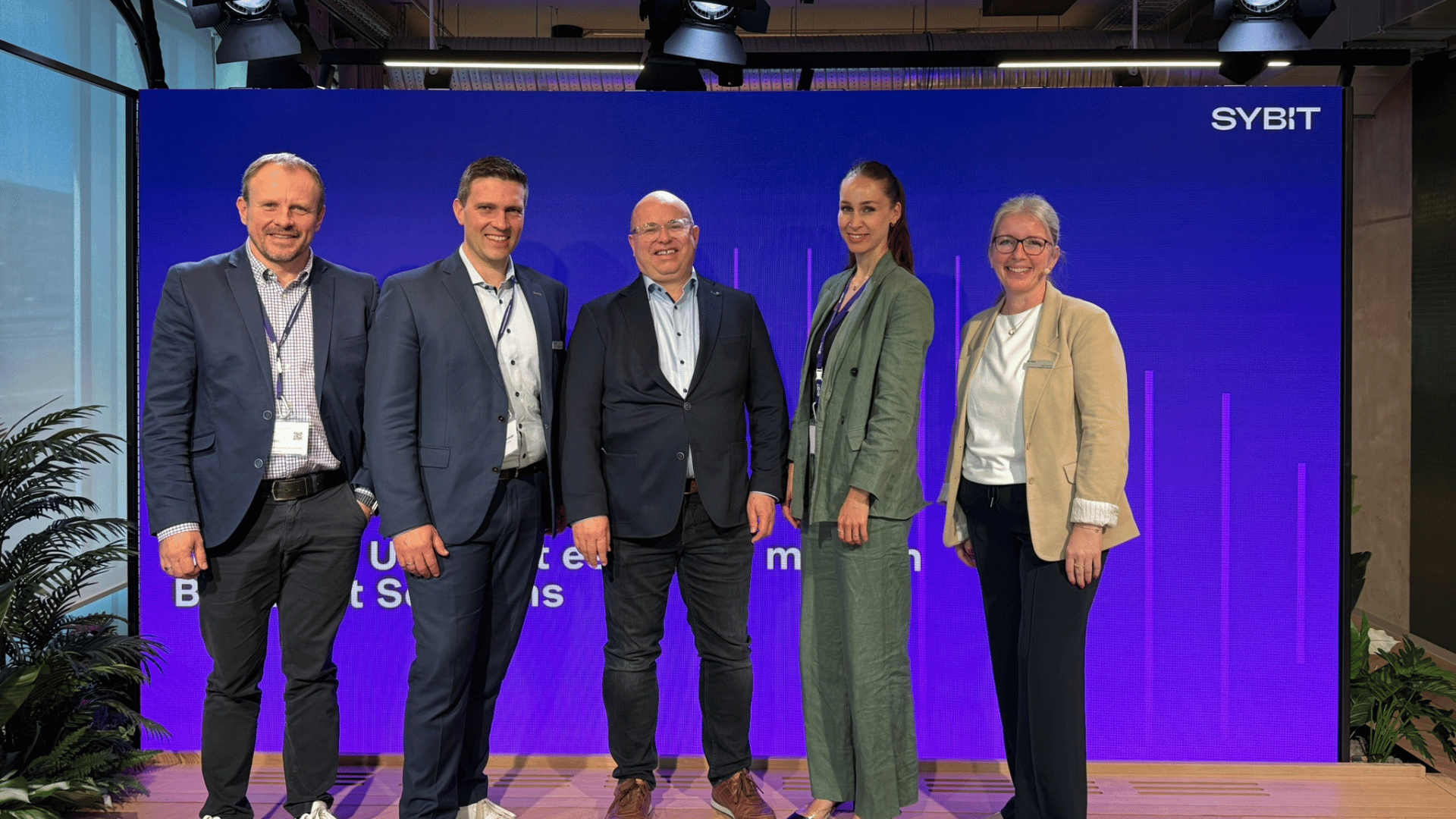
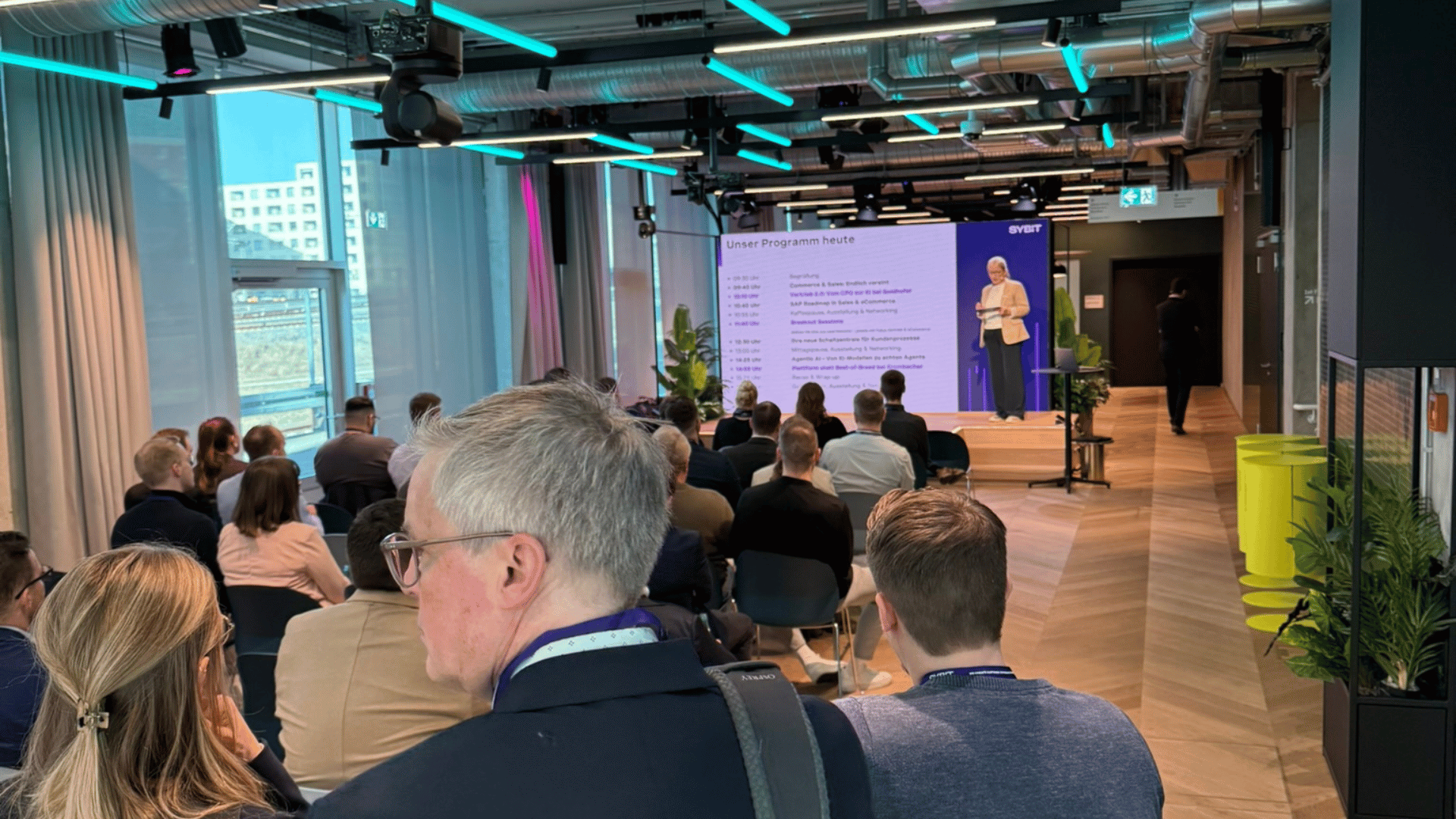
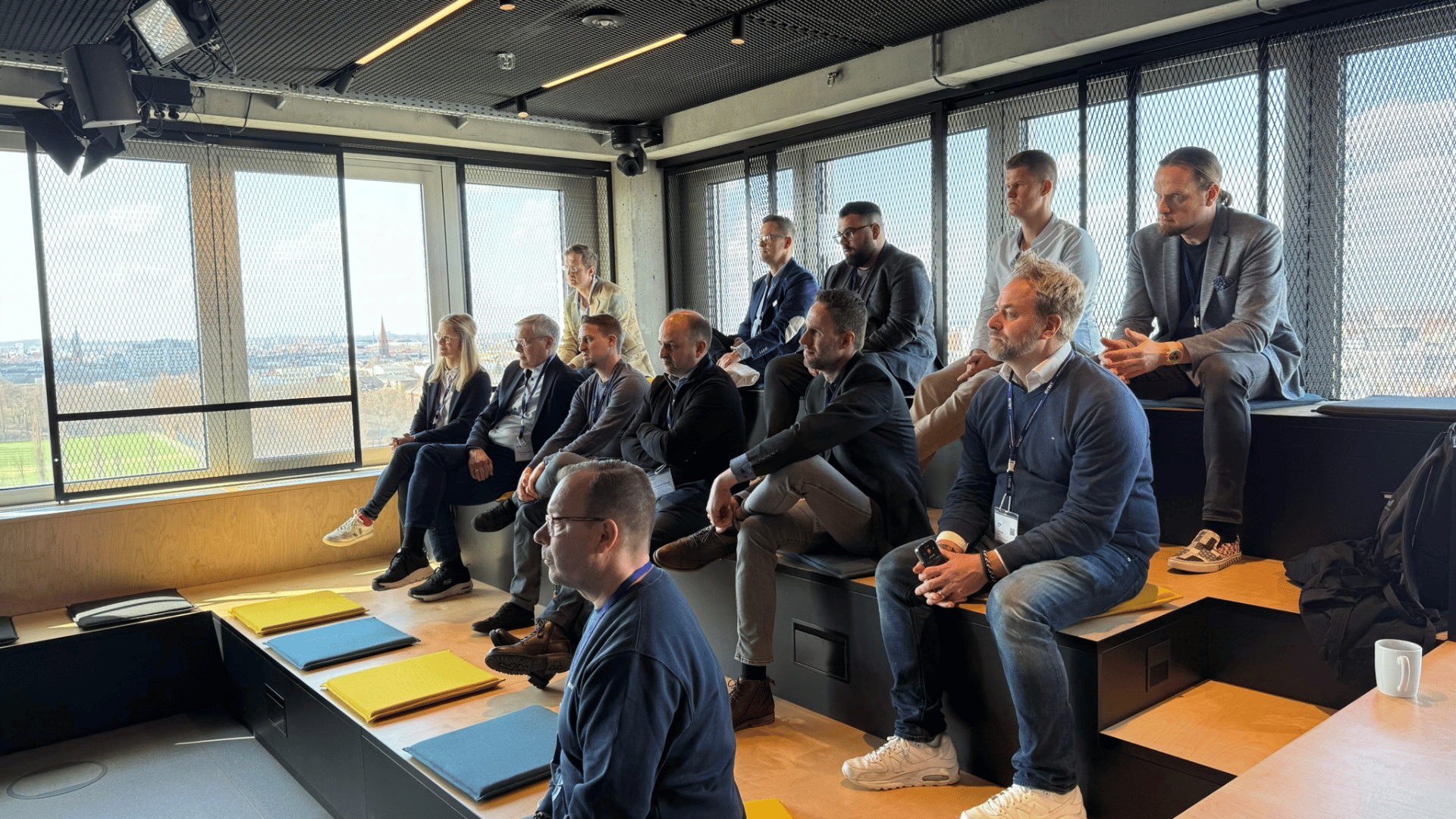
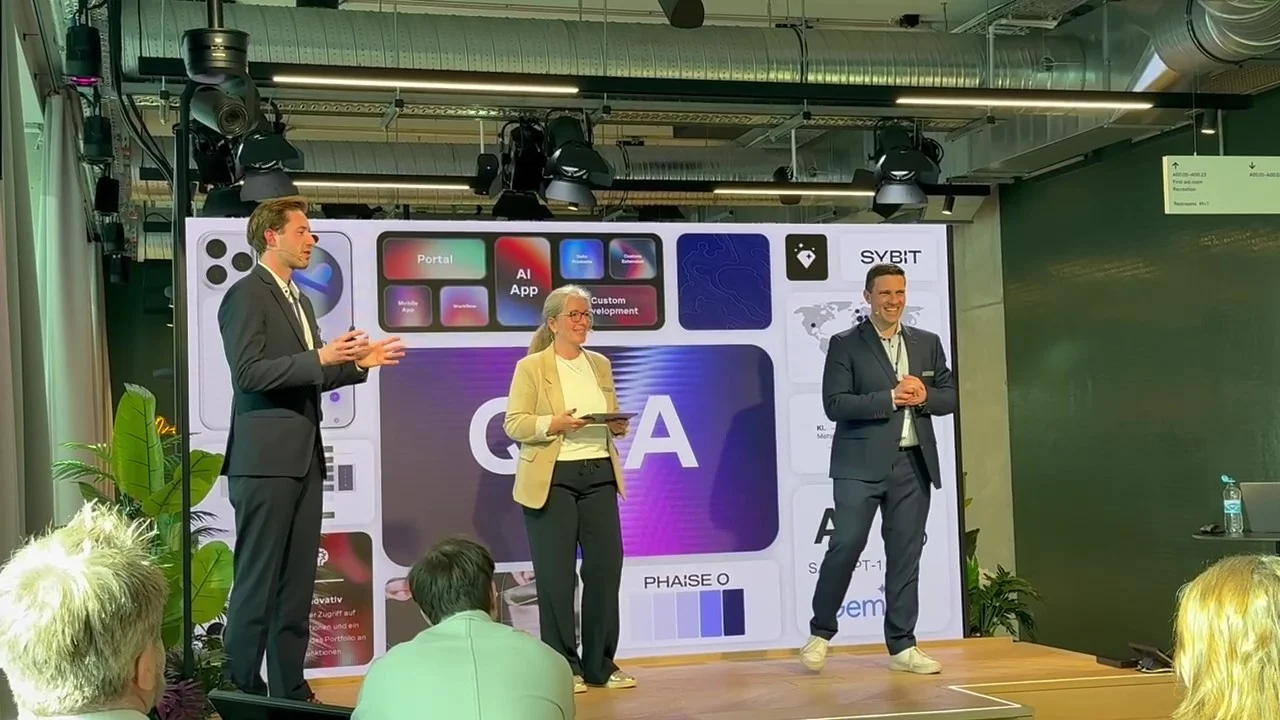
On 12 March 2026, SYBIT brought together almost 50 participants from Sales, eCommerce and IT. The focus was on concrete implementation approaches: from integrated commerce process chains to data-driven sales steering, all the way to Agentic AI as the next stage of operational automation. The event format was deliberately practical: keynotes, breakout sessions, live demos in the “SYBIT Worlds”, and intensive exchange, complemented by an exclusive pre-event dinner at the Hotel Adlon Kempinski Berlin.
B2B buying behaviour clearly shifts towards self-service – but relevance is the real differentiator
Data shows that the XBOOST topics are not “nice to have”, but reflect real market pressure.
B2B buying behaviour is becoming more digital – but also more selective
Customers expect self-service, but also maximum relevance. Irrelevant communication is systematically ignored.
61% of B2B buyers prefer a fully “rep-free” buying experience (digital research, self-service instead of classical salesperson interaction).
73% avoid vendors who send irrelevant outreach communications.
Omnichannel is the norm – integration remains the challenge
Customers naturally move across multiple channels. Breaks in the journey occur not in the front-end, but in the systems and processes behind it.
69% encounter inconsistencies between website information and what sales teams communicate.
AI is established – differentiation comes from execution
Most companies already use AI. Competitive advantage does not come from technology itself, but from data quality, governance and concrete use cases.
88% of companies use AI in at least one function, but most gain limited value because they fail to embed it into processes.
Only about one third truly scale AI across the organisation.
1. Integrating Commerce and Sales: From Channel Thinking to End-to-End Process Chains
A web shop does not replace sales – but it fundamentally changes its role.
Instead of isolated touchpoints, companies need a continuous process logic: Lead → Configuration → Quotation → Order → Service
In reality, customers do not move linearly through these steps. They jump between research, concrete purchase intentions and service topics – often simultaneously. Breaks occur exactly where systems and data are not connected.
An event example illustrated this with a typical B2B journey: from initial research via a trade fair contact, configuration in the web shop, coordination with sales, through to after-sales service. Without integrated data, these steps stay isolated and sales teams work without context.
The decisive lever is integration:
Shared data foundation for customers, products and interactions
Transparency on digital activities (e.g., configurations or pricing queries in the shop)
Deriving concrete sales impulses (“Next Best Action”)
Usage-based scenarios make this especially clear: if machine or usage data shows that a component needs replacing, a tailored offer can be generated automatically – visible in the portal and to sales simultaneously.
The same applies to indirect sales: integrated dealer models allow manufacturers, dealers and end customers to work on one shared data foundation – with clear roles, but without information loss.
2. Data-driven Sales: Moving from Experience to Steerability
Many sales organisations have large volumes of data but make little effective use of it.
The real issue is not lack of data, but lack of steering logic.
As customer journeys grow more complex, experience-based sales reaches its limits. At the same time, teams spend a disproportionate amount of time on non-value-adding tasks.
The key shift is: Stop producing more reports – start enabling decisions.
The XBOOST outlined a clear approach:
Define business objectives
Identify drivers
Derive KPIs
Define concrete actions
Example: Rather than merely measuring revenue, analyse which factors influence it, such as lead quality, deal size or closing speed – and derive corresponding actions.
Operationalisation happens via:
Value maps instead of isolated metrics
CRM playbooks that structure and standardise sales processes
A staged evolution from reporting to active steering
In practice, this was seen in global sales cockpits based on harmonised data as a single source of truth, or in standardised quotation processes that significantly reduce processing time and increase win rates.
Typical barriers remain:
Low team adoption
Weak governance
Too many reports without clear usage
Insight: Sales does not improve through more data, but through consistent use of data within processes.
3. Customer Portals as Central Platforms: The Path Out of Tool Fragmentation
Many companies have built digital touchpoints over years – often disconnected. For customers this means: multiple logins, inconsistent information, and media breaks.
The target picture is clear: One portal as the central access point for all interactions.
This is not about replacing systems, but connecting them meaningfully.
A key approach discussed at XBOOST: An Access Layer acting as an umbrella over systems like the shop, service cockpit or document management. Users have one login; specialist systems continue to work in the background.
Success factors include:
Identity and Single Sign-On as foundations
Integrating existing applications rather than rebuilding them
Clear prioritisation of use cases based on business impact
A portal strategy is not a one-off project, but a continuous evolution driven by user needs and business goals.
4. Agentic AI in Action: From Assistance Systems to Active Process Steering
Agentic AI was a central topic of the event – marking the next stage beyond classical AI.
The difference: Not just providing information, but actively supporting processes and preparing decisions.
Examples shared at XBOOST:
In complex product environments, AI supports quotation configuration using historic knowledge and rule sets.
Tenders and documents are automatically analysed and transformed into draft proposals – significantly reducing manual effort.
In commerce, “Smart Shopping Assistants” guide customers through the buying process and build suitable bundles.
In service, high ticket volumes can be handled more efficiently through automatic classification, prioritisation and partial automation.
The key success factor: Agentic AI must be understood as an architectural approach, not as isolated use cases.
A layered model is required:
Source systems
Integration/data layer
Agent layer
Application layer
Data from SAP and non-SAP sources is made “AI-ready”, agents access this data as modular building blocks, and are integrated into CRM, portals or shops.
This enables technology to be added or replaced (new model, additional agent, different data platform) without rebuilding the foundation.
Sustainable scaling follows a clear order: Stabilise data and process foundations → add agents → orchestrate agents.
XBOOST Format: From Orientation to Concrete Implementation
The XBOOST was deliberately not a classical conference. Instead of tool demos or abstract strategies, the core question was:
How can concrete business problems be solved today?
Participants gained:
Robust classification of current trends
Practical real-world examples
Actionable operating models
Peer-level exchange
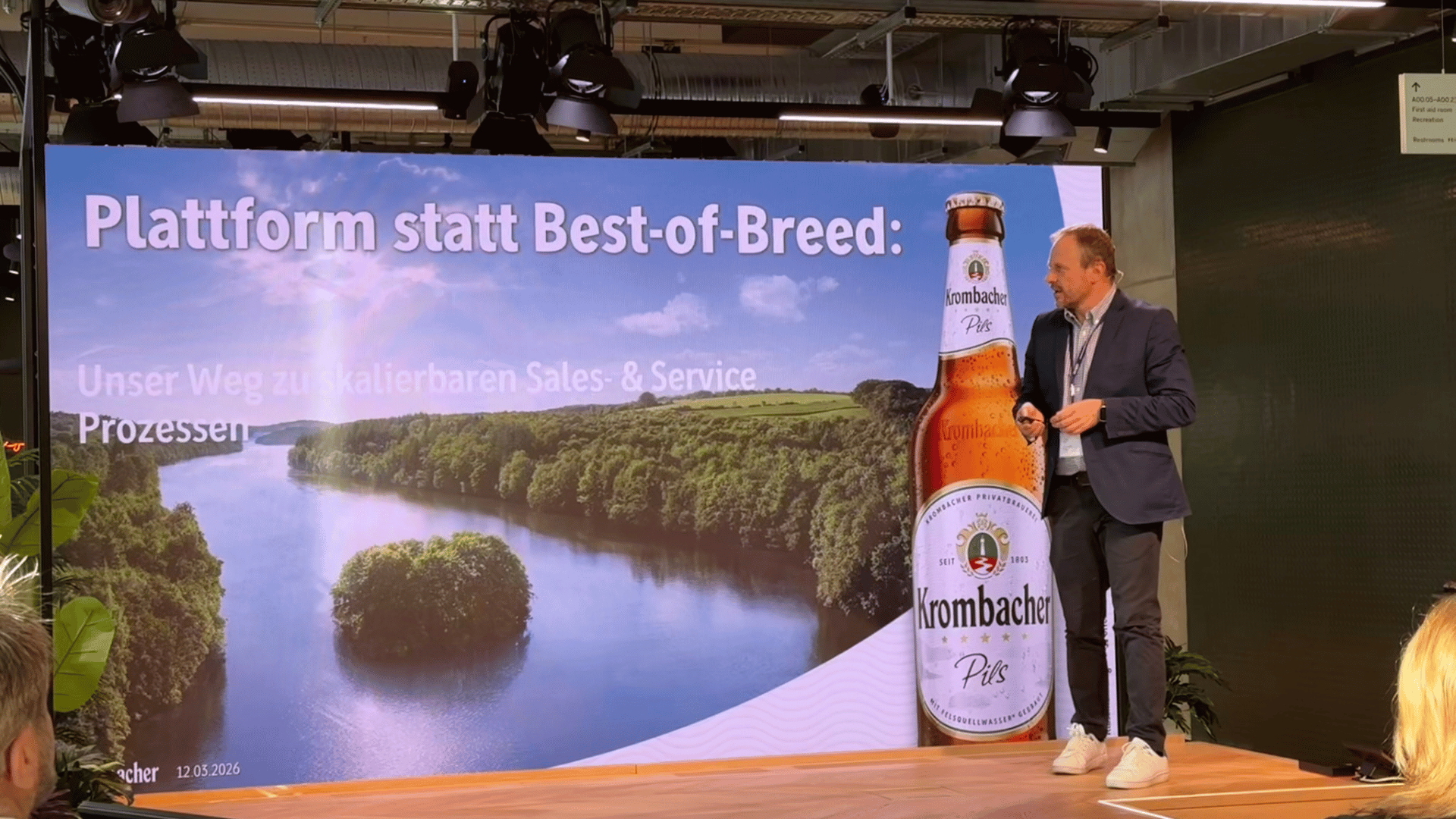
Particularly valuable were authentic insights from companies like Goldhofer and Krombacher, who openly shared their transformation journeys.
Conclusion: What Decision-Makers Should Now Take Away
XBOOST Sales & eCommerce 2026 highlighted one overarching message: Challenges in Sales, Commerce and Service can no longer be solved in isolation.
The decisive capability is to connect processes, data and systems in a way that creates a consistent, steerable and scalable customer journey.
Companies that continue treating sales and commerce processes separately risk creating exactly the breaks customers no longer tolerate. Simply adding tools or collecting more data will not help. The real value comes from translating data into decision logic and embedding it into operations.
For AI, the same holds true: Agentic AI only unfolds its value as part of a coherent architecture with clean data foundations and governance.
Customer portals as access layers play a central, connecting role. They enable consistent information availability and ensure interactions do not fail at system boundaries.
Decision-makers should focus on integrated end-to-end approaches. Those who can build end-to-end processes, link data meaningfully and integrate AI into operational workflows will not only increase efficiency, but – above all – strengthen their market relevance.
Digital experiences decide – on revenue, satisfaction, and loyalty
Customers expect more than isolated touchpoints. They demand seamless, intuitive processes, consistent information, and true self-service—across every channel. The reality in many companies: fragmented systems, broken journeys, and unnecessary friction. The result: lost revenue, rising service costs, and declining customer satisfaction. A holistic digital experience closes this gap—and turns customer interactions into a strategic advantage.